
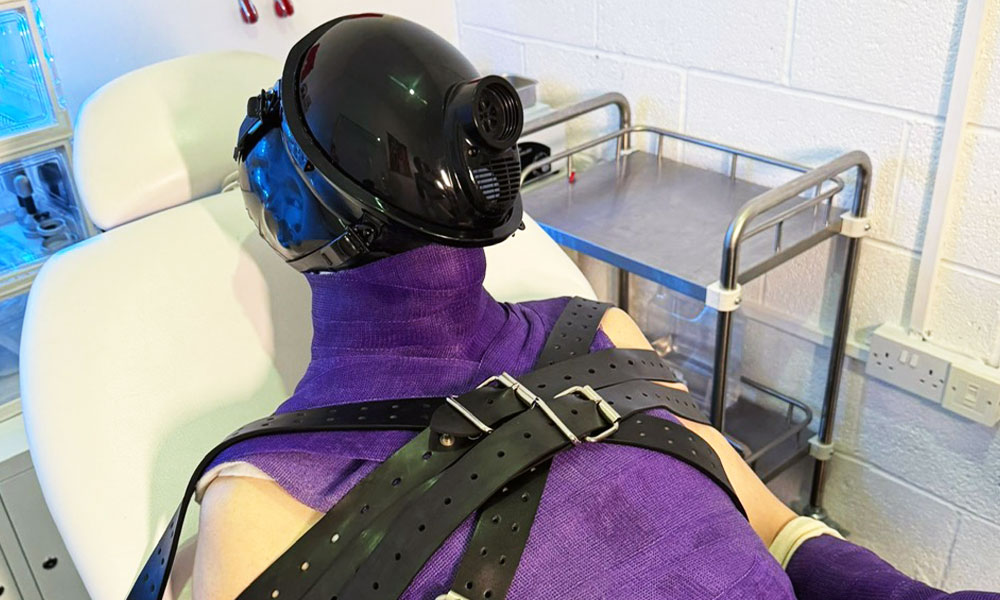
Predicament play is one of those BDSM experiences that sounds simple until you understand what it actually does to the mind. On paper, it may look straightforward: hold a position, stay where you are put, maintain control of your body, and endure discomfort without breaking posture. In practice, it can be one of the most intense forms of submission there is.
That is because predicament play is not only about restraint or physical challenge. It is about pressure, anticipation, focus, and the psychological effect of knowing that every small movement matters. A skilled Dominatrix uses predicament play to create a space where the submissive becomes acutely aware of their own body, their own choices, and the fact that someone else is in control of the rules.
For many clients, that is exactly what makes it so powerful. It is not about chaos. It is about structure. It is not about doing more. It is about feeling more.
What predicament play actually is
Predicament play usually places a submissive in a controlled situation where there is no fully comfortable option. You may be required to hold still, balance, maintain a posture, remain in restraint, or tolerate a position that becomes more demanding over time. The challenge is not necessarily extreme pain. Often, it is the growing awareness of tension, effort, vulnerability, and the desire to move when you are expected not to.
That is why it feels so different from ordinary bondage. Basic restraint can create helplessness, but predicament play adds a layer of mental engagement. You are not just secured. You are participating in your own endurance. You are aware of the task, the expectation, and the consequence of failing to maintain control.
A Manchester Dominatrix may use predicament play to heighten obedience, sharpen focus, and bring a submissive deeper into headspace. The physical set-up matters, but the real intensity often comes from what is happening psychologically. You are waiting, managing sensation, and learning that stillness can be far more demanding than frantic action.
Why “holding still” becomes so intense
In everyday life, movement is something most people hardly think about. If your foot aches, you shift. If your shoulder tightens, you adjust. If a position becomes uncomfortable, you change it without a second thought. Predicament play removes that freedom. Suddenly, something as ordinary as moving your weight, flexing a muscle, or dropping your posture becomes significant.
That change creates intensity very quickly. The body starts speaking louder. Small sensations become impossible to ignore. Minutes can feel much longer. The mind becomes hyper-aware of everything it would normally dismiss.
This is where the experience can become deeply submissive. A posture is no longer just a posture. It becomes an instruction. Endurance becomes obedience. Remaining still becomes a way of actively surrendering control to the person who set the task.
For some clients, that is what makes predicament play so much more affecting than they expected. There may be no dramatic theatrics, no rush, no frantic sequence of events. Yet the scene feels overwhelming because it demands concentration, discipline, and acceptance.
Endurance is as much mental as physical
When people hear the word endurance, they often assume it means pushing the body to extremes. In reality, the most compelling form of endurance in BDSM is usually the meeting point between body and mind. The body feels strain, pressure, heat, trembling, or fatigue. The mind decides what those sensations mean.
At first, the instinct may be to resist. You notice discomfort and want it gone. But as the scene deepens, many submissives experience a shift. Instead of fighting every sensation, they begin to settle into it. They stop negotiating internally and start accepting the position they have been placed in. That is where predicament play can become surprisingly powerful.
A good Dominatrix understands that endurance is not about proving something macho or reckless. It is about guiding a submissive into a more focused state where they can let go of constant self-management. Done well, it can feel strict, consuming, and oddly calming at the same time.
That is one reason a Manchester Dominatrix may include predicament elements within a wider session. It allows the submissive to experience control in a more embodied way. They are not only hearing authority. They are holding it in their muscles, their breathing, and their stillness.
Mind-body surrender is the real appeal
One of the most interesting things about predicament play is that it often leads to surrender through repetition and containment rather than through spectacle. A client may begin a scene feeling alert, self-conscious, or determined to perform well. But the longer the position is held, the less room there is for performance. Eventually, what remains is honesty.
You feel your limits more clearly. You become more aware of your breathing. You stop trying to look composed and start concentrating on staying present. In that state, many submissives discover a different kind of surrender. It is not dramatic or theatrical. It is simple and total. You are there, you are being held to a standard, and you are no longer pretending that you are in charge.
That is why predicament play can feel so intimate. Even when the activity itself looks minimal from the outside, the internal experience can be very deep. The mind and body begin to align around one task: submit, endure, and stay where you are put.
How consent works in practice
Because predicament play can become intense quickly, consent has to be practical, not just theoretical. That means communication before the session begins. A Dominatrix needs to know about injuries, mobility issues, previous experience, flexibility, stamina, and any fears or hard limits that may affect the scene. A client also needs to be honest about what they want from the experience. Do they want a light challenge, a strict obedience exercise, or something more immersive and demanding?
Safewords and signals are essential, especially if the scene includes restraint, pressure, or any element that reduces ease of movement. Consent is not a vague atmosphere; it is a clear agreement supported by communication and ongoing awareness.
It is also important to understand that consent does not weaken the intensity. It makes the intensity possible. A submissive can go deeper when they trust that the scene is being handled properly.
Why pacing matters so much
Pacing is where experience shows. Predicament play should not leap straight to maximum intensity. A skilled Dominatrix builds it. The body is given time to settle. The challenge increases in a measured way. The submissive is allowed to drop into the scene rather than being thrown at it.
Good pacing also means reading responses. Trembling, breathing patterns, focus, frustration, pride, and emotional shifts all tell part of the story. Sometimes a scene needs to tighten gradually. Sometimes it needs pauses, adjustments, or a more deliberate arc. That is how predicament play becomes intense in the right way: not messy, not random, but expertly controlled.
For clients interested in booking a Manchester Dominatrix, that is worth remembering. The most memorable BDSM is rarely the most rushed. It is the most intentional.
Why it stays with people
Predicament play lingers because it reveals something. It shows how much power can exist in stillness, how much submission can be found in posture, and how deeply a controlled challenge can affect the mind. It strips away distraction and leaves a client face to face with obedience, endurance, and the relief of no longer making every decision for themselves.
That is why holding still can feel so intense. It is not empty. It is full of pressure, meaning, and surrender. In the hands of the right Dominatrix, it becomes far more than a test of posture. It becomes a lesson in what it means to yield.